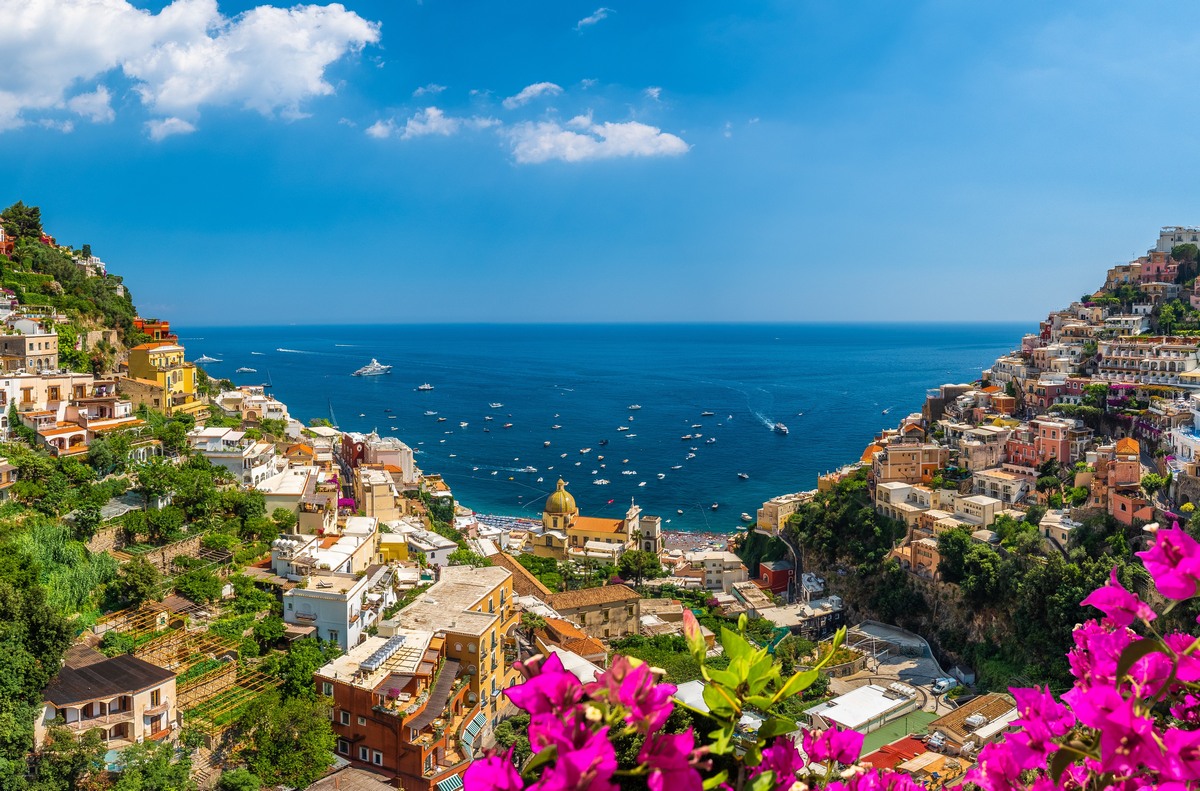
Once upon a time, nestled along the rugged Amalfi Coast, there was a sleepy little fishing village called Positano. Its colorful houses perched on the hills, overlooking the sparkling sea below. Back then, life was simple and unassuming, the only sounds were the lapping of the waves against the shore and the seagulls calling out to one another. But as the years passed, Positano's beauty was discovered by the world, and it became one of the most luxurious and sought-after destinations in Italy.
Despite its transformation, the charm of Positano remained. Its narrow pedestrian streets meandered down to the heart of the village, the grand Santa Maria Assunta church. The ancient 13th-century temple boasted an unusual dome adorned with majolica tiles, gleaming in the sunlight. But what drew the faithful from far and wide was the Byzantine icon of the Black Madonna, enshrined within its walls. The legend of how the icon appeared in Positano was a tale of wonder and awe, and those who visited the church couldn't help but be mesmerized by its beauty.
But it wasn't just the church that captured visitors' hearts. Positano's main beach, Marina Grande, was a breathtaking sight. Crystal clear waters lapped at the sandy shores, while luxurious yachts cruised by, a symbol of the town's newfound prosperity. For those in the mood for some indulgence, Michelin-starred restaurants lined the beachfront, offering mouthwatering delicacies to savor while gazing out at the azure horizon.
As the sun set over the horizon, the village of Positano became a kaleidoscope of colors, the hues of its houses merging with the warm glow of the evening sky. The gentle sound of the sea provided a soothing soundtrack as the town came to life with the bustle of tourists and locals alike. And so, Positano remained a place of enchantment, where old-world charm met modern-day luxury, a place where beauty abounded at every turn..
Get update to special deals and exclusive offers.
